
Iron Deficiency in Women: Why It's So Common and What You Can Do About It
You're tired. You're losing more hair than feels normal. Your hands are always cold, your focus comes and goes, and no matter how much sleep you get, you still drag yourself through the afternoon. Sound familiar?
For many women, this collection of symptoms gets dismissed, attributed to stress, or "normal aging." But one of the most frequent culprits is also one of the most under-diagnosed: iron deficiency. Not just iron-deficiency anemia, but low iron stores that tank your energy and quality of life long before your blood count officially drops into the anemic range.
As a naturopath in Leslieville, Toronto, I see iron deficiency in women regularly and I've found that most of my patients were either never tested properly, or were told their results were "normal" despite experiencing every symptom of iron depletion. This blog breaks down everything you need to know: how common it really is, what's driving it, how to test accurately, what supplements are available, and the naturopathic strategies that move the needle.
How Common Is Iron Deficiency in Women?
Iron deficiency is the most widespread nutritional deficiency in the world — and women of reproductive age are disproportionately affected. In Canada, data from the Canadian Health Measures Survey found that approximately 18–21% of women between the ages of 14 and 50 have iron deficiency. Among premenopausal women specifically, the prevalence sits around 16%. Health Canada has formally identified iron deficiency as a public health concern of "moderate magnitude" among premenopausal Canadians.
The picture becomes even clearer when you include iron deficiency without anemia- meaning depleted iron stores with no change (yet) in red blood cell counts. This stage is far more common than full anemia, and it causes real, debilitating symptoms. Women can spend months or years in this state before a conventional blood test raises a red flag.
Key stat: Up to 1 in 5 Canadian women of reproductive age are iron deficient. Most of them don't know about it.
What Causes Iron Deficiency? Three Root Categories
Iron deficiency rarely has a single cause. In most women I see, it's a combination of factors from two or three of these categories working together over time.
1. Low Iron Intake
The body can't make iron — it must come from food. When dietary sources fall short, stores deplete gradually. Low intake is common in:
Vegetarian and vegan diets. Plant foods contain non-heme iron, which is absorbed at only 1–10%. Animal-derived heme iron is absorbed at up to 25–30%. Without strategic food combining, plant-based eaters can easily fall short.
Low-calorie or restrictive diets. Any dietary pattern that limits overall food volume reduces iron intake by default.
Busy eating patterns. Convenience foods and ultra-processed diets are typically poor sources of bioavailable iron.
Top heme iron sources: red meat, organ meats (especially liver), shellfish, oysters, clams, poultry, fish.
Top non-heme iron sources: lentils, chickpeas, tofu, tempeh, dark leafy greens (spinach, Swiss chard), pumpkin seeds, fortified grains.
2. Absorption Issues
You can eat plenty of iron and still be deficient if your gut isn't absorbing it well. This is more common than most people realize, and it's one of the first things I investigate with patients who aren't responding to dietary changes alone.
Common absorption barriers include:
Low stomach acid (hypochlorhydria). Stomach acid converts ferric iron (Fe³⁺) to the ferrous form (Fe²⁺) that the intestine absorbs. Low acid — from aging, chronic stress, or proton pump inhibitors (PPIs) — impairs this conversion.
Celiac disease and gluten sensitivity. The duodenum — where most iron is absorbed — is the same part of the small intestine damaged by gluten in celiac disease. Up to 80% of women newly diagnosed with celiac have low ferritin.
Small intestinal bacterial overgrowth (SIBO). Bacteria in the small intestine can compete for iron and disrupt absorptive surface area.
Hypothyroidism. Thyroid dysfunction reduces gastric acid output and can lead to sluggish gut motility, both of which impair iron uptake. Women with Hashimoto's are particularly at risk.
Dietary inhibitors consumed alongside iron-rich meals — including phytates (raw legumes, whole grains, nuts, seeds), polyphenols and tannins (coffee, tea, red wine), calcium (dairy and supplements), and oxalates (beet greens, spinach).
3. Blood Loss and Higher Demand
Even with good intake and absorption, some women can't keep up with how much iron their body is using or losing.
Heavy menstrual bleeding (HMB). The most common driver of iron deficiency in premenopausal women. Losing more than 80 mL of blood per cycle can deplete stores significantly over time. Conditions like fibroids, adenomyosis, and endometriosis all increase menstrual blood loss.
Pregnancy and breastfeeding. Iron demand increases dramatically in pregnancy — the fetus, placenta, and increased blood volume all require iron. Many women enter pregnancy already depleted.
Frequent blood donation. Each donation removes roughly 200–250 mg of iron. Donating multiple times per year without replenishment can deplete stores.
Endurance exercise. Long-distance runners and high-volume athletes lose iron through sweat, foot-strike hemolysis, and GI blood loss during intense training.
GI blood loss. Hemorrhoids, ulcers, H. pylori infection, or inflammatory bowel disease can cause slow, chronic blood loss that quietly drains iron stores.
How Iron Deficiency Shows Up: Recognizing the Signs
Iron is a cofactor in hundreds of enzymatic reactions. It's essential for oxygen transport, mitochondrial energy production, neurotransmitter synthesis, and thyroid hormone conversion. When stores are low, you feel it everywhere.
Common presentations I see in clinic include:
Fatigue and low energy — often most pronounced in the afternoon, and not relieved by sleep
Hair thinning or shedding — ferritin below 70 ng/mL is associated with telogen effluvium even without anemia
Brain fog and difficulty concentrating — the brain is highly oxygen-dependent; impaired iron delivery affects cognition measurably
Restless legs syndrome — iron plays a direct role in dopamine signaling in the brain's motor pathways
Cold hands and feet — poor peripheral circulation and reduced cellular heat production
Headaches — particularly tension headaches from reduced oxygen delivery to the brain
Brittle nails or koilonychia — spoon-shaped nails in more severe deficiency
Pallor — paleness in the skin, gums, inner eyelids, or nail beds
Shortness of breath with exertion — common once anemia sets in, but energy symptoms appear well before
Pica — cravings for non-food items like ice, chalk, or clay (a surprisingly reliable iron deficiency sign)
Important: Many of these symptoms appear when ferritin is between 30–50 ng/mL — levels a conventional lab report may flag as "normal." This is why the standard reference range and the functional optimal range are very different things.
How to Test for Iron Deficiency
Why Ferritin Alone Can't Tell the Whole Story
Ferritin is the storage form of iron, and it's the most sensitive early marker of iron depletion. In a straightforward case such as a healthy woman with heavy periods and no inflammation, ferritin is genuinely useful.
But ferritin is also an acute phase reactant, meaning it rises in the presence of inflammation, infection, autoimmune activity, obesity, or liver stress. In these scenarios, a "normal" or even elevated ferritin can mask true iron deficiency. A woman with Hashimoto's thyroiditis, PMOS, or any chronic inflammatory condition can have a ferritin of 60 ng/mL while her iron stores are functionally depleted.
In other words: a high ferritin in an inflamed person tells you about inflammation, not necessarily iron status.
Equally important: standard lab reference ranges for ferritin are set to detect anemia, not to optimize health. The lower limit at most labs is 12–15 ng/mL — far below what's needed for energy, hair growth, and brain function. In naturopathic practice, we target ferritin between 50–100 ng/mL for women with fatigue or hair loss. Hair-loss literature consistently points to 70–80 ng/mL as the minimum to support robust follicle activity.
A Complete Iron Panel: What Else to Test
When I'm evaluating iron status — especially in a patient with inflammation or a complex history — I use a full panel:
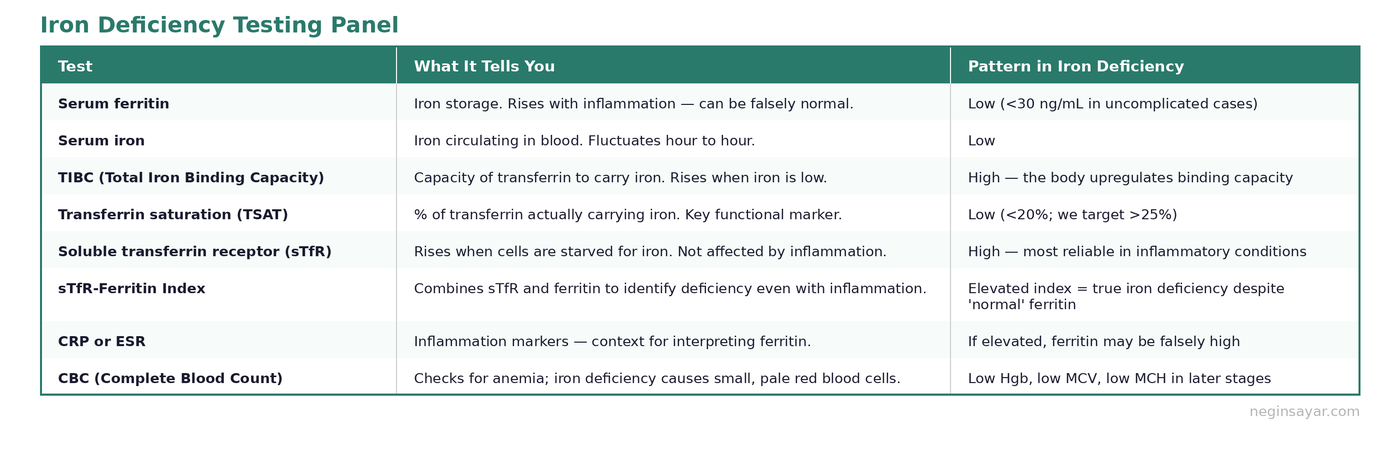
When to suspect your ferritin is inflated: If your ferritin appears normal but you have ongoing inflammation, autoimmune disease, obesity, or a recent infection, always pair it with a CRP and a full iron panel. Soluble transferrin receptor (sTfR) is the most reliable marker in these scenarios — it is not an acute-phase protein and rises only in response to true cellular iron starvation.
Iron Supplementation: Form Matters
Understanding Elemental Iron
When you look at an iron supplement label, you'll see two numbers: the compound dose (e.g., 325 mg ferrous sulfate) and the elemental iron content (e.g., 65 mg). Elemental iron is what your body actually absorbs — the rest is the delivery molecule. The amount of elemental iron per dose varies significantly between forms.
This matters because the GI side effects of iron (nausea, constipation, dark stools, cramping) are dose-dependent for elemental iron. The goal is to get enough elemental iron to restore stores without overwhelming the gut.
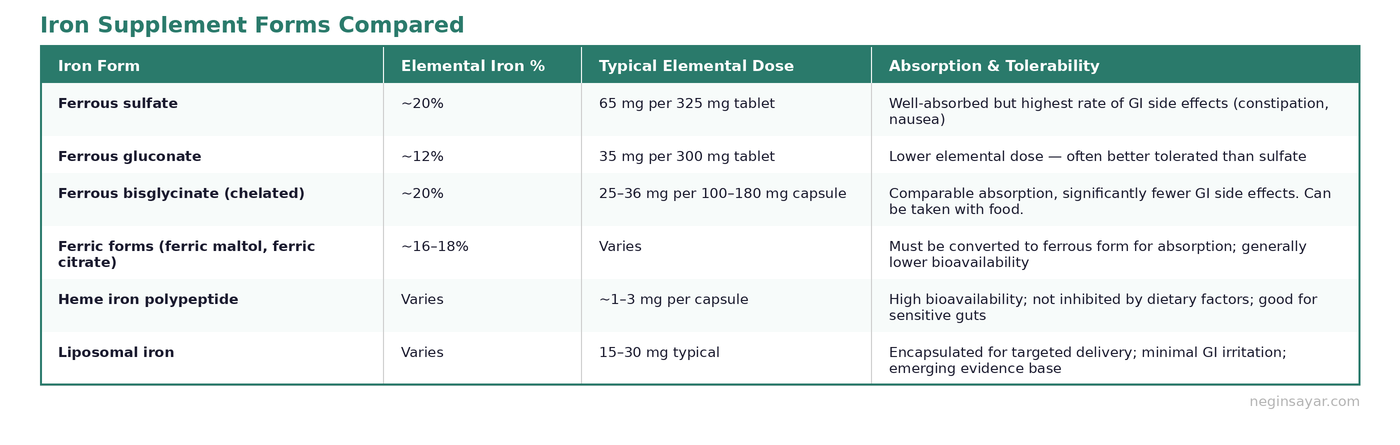
Key Supplementation Tips
Take with vitamin C. 50–100 mg of vitamin C alongside iron enhances conversion to the absorbable ferrous form and can significantly increase absorption.
Separate from coffee, tea, calcium, and dairy by at least 1–2 hours.
Consider every-other-day dosing. Emerging research suggests alternate-day iron may improve net absorption because of hepcidin dynamics — daily dosing can trigger a refractory period where absorption temporarily decreases.
Don't supplement without testing. Iron accumulates and excess is oxidative and inflammatory. Always confirm deficiency before supplementing, and retest after 8–12 weeks.
A Naturopathic Approach to Iron Deficiency
From a naturopathic perspective, correcting iron deficiency is rarely just about adding a supplement. It's about understanding why you're depleted in the first place and addressing that root cause alongside replenishment.
1. Find the Root Cause First
Before recommending any protocol, I want to know: Is this a diet issue? An absorption issue? Is there underlying blood loss? Are there co-existing conditions like celiac disease, Hashimoto's, or SIBO that need to be addressed? Without identifying the driver, iron supplementation is a patch on a leaking pipe.
2. Optimize Iron From Food
Prioritize heme iron from red meat, liver, oysters, and clams if your diet allows — these provide the most bioavailable iron.
Pair non-heme iron with vitamin C: lentil soup with lemon juice, spinach salad with bell pepper and strawberries, beans with tomatoes.
Cook with cast iron cookware. Cooking acidic foods (tomato sauce, citrus-based dishes) in cast iron leaches small amounts of iron into food — a simple, meaningful upgrade.
Soak or sprout legumes and grains to reduce phytate content and improve iron bioavailability.
Move coffee and tea away from meals. This single habit change can meaningfully increase dietary iron absorption.
3. Support Gut Health and Absorption
If low stomach acid or gut inflammation is contributing, I may also recommend:
Digestive bitters or apple cider vinegar before meals to support stomach acid production if necessary
Testing and treating SIBO if gut dysbiosis is suspected
Celiac antibody screening (tissue transglutaminase IgA) if absorption is poor and dietary intake seems adequate
Thyroid assessment given the high co-occurrence of thyroid dysfunction and iron deficiency in women
4. Address Menstrual Blood Loss
If heavy periods are the driver, the conversation goes deeper. Iron supplements help manage depletion, but they don't address why bleeding is heavy in the first place. Hormonal balancing, investigating for fibroids or adenomyosis, optimizing progesterone levels, and reducing prostaglandin-driven flow are all part of a complete picture. Vitex (chaste tree), magnesium, and anti-inflammatory protocols all have supporting evidence here.
5. Co-Factors for Iron Metabolism
Iron doesn't work in isolation. These nutrients support optimal iron utilization:
Vitamin C — essential cofactor for non-heme iron absorption
Vitamin B12 and folate — needed for red blood cell production; deficiency can mimic or co-exist with iron deficiency
Copper — required for ferroportin function, the protein that exports iron from cells into the bloodstream
Vitamin A — plays a role in iron mobilization from liver stores
Working With a Naturopath in Toronto for Iron Deficiency
If you're in Toronto — in Leslieville, Riverdale, the Beaches, or the East End — and you've been struggling with fatigue, hair loss, brain fog, or any of the symptoms above, I'd love to help you get to the bottom of it.
In my practice, I order comprehensive iron panels, look for root causes including gut and thyroid health, and create individualized protocols that go beyond a standard supplement recommendation. We look at the full picture, because that's where the answers usually are.
Ready to find out what's really driving your fatigue?
Book a naturopathic appointment with Dr. Negin Sayar, ND at neginsayar.com. Serving patients in Leslieville, Toronto, and Ontario via in-person and virtual visits
This blog is for educational purposes only and does not constitute medical advice. Consult a qualified healthcare provider for personalized guidance.